
Transfer Statements
Link: UbD Long Term Transfer Goals
Source: © 2014 Jay McTighe
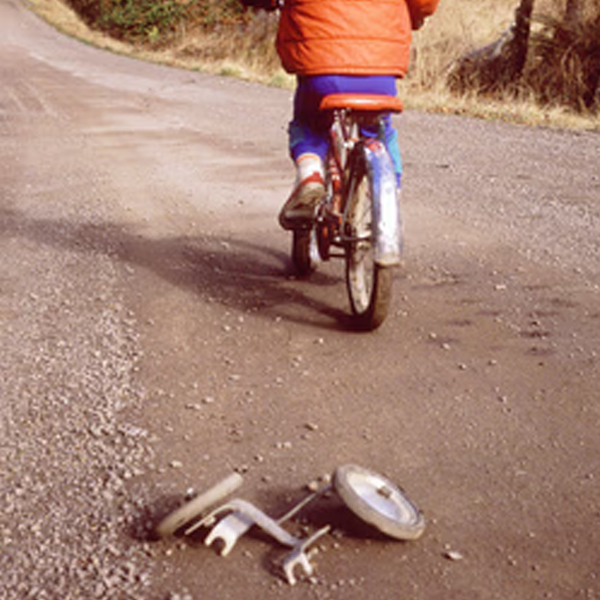
Transfer statements in the Understanding by Design (UbD) framework are long-term, overarching goals that define what students should be able to do with their learning—independently and in new situations—after a unit, course, or graduation. Unlike specific skill objectives, transfer goals focus on applying knowledge to real-world contexts without prompt or coaching.
G.R.A.S.P.S.
Stage 2 Performance Tasks
Link: GRASPS: Constructing a Task Scenario
Source: ©2010 Jay McTighe and Grant Wiggins
The GRASPS framework, developed by Wiggins and McTighe, is a tool for creating authentic performance tasks in education. It defines real-world scenarios to help students demonstrate understanding through Goal, Role, Audience, Situation, Product/Performance, and Standards. It focuses on applying knowledge rather than just recalling facts, commonly used for project-based learning.
Universal Design for Learning (UDL)
NISN supports the integration of UDL into classroom curriculum to ensure students have equitable access to quality instruction and materials.
Universal Design for Learning is a framework designed by CAST
Links:
Website source: https://www.cast.org
UDL 3 Graphic Organizer with numbers
UDL 3 Graphic Organizer- Blank for Planning
The UDL Guidelines are a tool used in the implementation of Universal Design for Learning, a framework developed by CAST to improve and optimize teaching and learning for all people based on scientific insights into how humans learn. The goal of UDL is learner agency that is purposeful & reflective, resourceful & authentic, strategic & action-oriented.
The guidelines offer a set of concrete suggestions that can be applied to any discipline or domain to ensure that all learners can access and participate in meaningful, challenging learning opportunities. The new iteration of the UDL Guidelines responds to a strong call from the field—both practitioners and researchers alike—to address critical barriers rooted in biases and systems of exclusion for learners with and without disabilities.
Planning Resources
Planning Resources
Link: Community Asset Mapping and Localization Note Catcher
Source: NISN
This is a graphic organizer created to assist communities and individuals in community asset mapping and identifying local resources and opportunities to localize curriculum resources. It can be used by communities and teacher designers as they develop curriculum units.
Links:
NM PED Indigenous Score and Sequence (website)
NMPED Indigenous Scope Poster
Source: NISN
The New Mexico Indigenous Instructional Scope is designed to support educators in being intentional in their lesson planning and programmatic planning while taking specific considerations into account that may impact indigenous students and communities. It is intended to be a tool to support all educators as they provide high-quality culturally responsive educational experiences across New Mexico. The NM Indigenous Instructional Scope includes a set of tenets comprising elements and considerations that, when combined, provide encouragement and inspiration to support the creation of learning environments which incorporate culturally and locally aligned supports for indigenous students from the 23 sovereign Pueblos, Tribes, and Nations across NM.
In consideration of the importance of the cultural and linguistic diversity of our learners, the creation of this tool, written by a committee of indigenous people from across NM who were nominated by their tribal leaders, is intended to provide a resource that guides educators in considering and incorporating the rich backgrounds of students at the local level. The Scope is not a curriculum. Rather, the NM Indigenous Instructional Scope is a tool that can be used alongside the other NM Instructional Scopes Scopes (Language Arts, Spanish Language Arts, Mathematics, Science, and Social Studies, click here for NM Instructional Scopes Homepage) and is intended to help assure that all students have access to culturally and linguistically responsive instruction that respects students. This tool also seeks to help educators understand the importance of indigenous identity, with suggestions for how and when to incorporate the rich backgrounds of NM students within the school and classroom environments.